

Every time a truly era-defining technology arrives, it is greeted by a “Doomsday” narrative. When personal computers first entered the office, people were certain that secretaries and clerks were finished. But secretaries didn’t vanish—they were liberated. They stopped wrestling with carbon paper and correction fluid and started performing higher-level work with far less frustration. We saw a similar panic with the Y2K “collapse” of 2000, yet human ingenuity solved the crisis before it ever touched our daily lives.
Familiar alarmism has found a new target: Artificial Intelligence. While many experts paint AI as a “Destroyer,” science and history suggest a far more hopeful reality. AI is not our end; it is a Holy Grail—the ultimate catalyst to refine raw human effort into a future of global abundance.
The Productivity Quantum Leap
When I arrived in the United States from India in 1982, the productivity differential was staggering. Essentials like chicken, milk, and gasoline were inexpensive in the U.S. because of advanced industrialization. Today, as the rest of the world catches up, AI represents the next great leap forward. In software engineering, it strips away laborious syntax work so engineers can focus on the architecture of ideas. In medicine, AI scans diagnostic images with precision that was once unthinkable. By slashing the cost of these high-level functions, we move closer to providing quality care to all eight billion people on Earth—not just the wealthy few.
Proactive Guardrails
Still, there is a deep-seated fear that AI might become “smarter” than its creators and spin out of control. Our history is a long ledger of taming forces more powerful than ourselves—from the tiny atom to the mighty lightning bolt. The intelligence required to create a tool inherently carries the capacity to overpower or redirect it. We are not just the parents of AI; we are its engineers.
While a disaster is unlikely, it’s wise to take steps to prevent it. A robust partnership between government and industry must mandate that companies develop safety remedies in parallel with their AI advancements. We don’t just build the engine; we build the brakes and the steering in the same lab.
A Humanitarian Mandate
AI’s promise of abundance only works if the wealth it creates isn’t hoarded. Governments must ensure that AI’s gains are broadly shared—perhaps through sensible limits on the ratio between executive pay and the lowest-paid worker, and by guaranteeing a basic standard of food, housing, and healthcare for every human being. Crucially, this floor does not kill incentive. Human behavior is naturally aspirational; the drive to invent and compete will remain. The standard of living rises for everyone, but the ceiling for those who wish to achieve more stays infinite.
The Courage to Innovate
As the founder of my company, Dr. Arnold O. Beckman, once declared: “The only way to avoid mistakes is to do nothing, and that is the ultimate mistake.” That spirit applies directly to AI: the risk of bold action is always smaller than the certainty of bold inaction.
If we regulate AI fairly and distribute its benefits wisely, we will find that it isn’t the end of our story. It is the beginning of our most brilliant chapter—one written for the benefit of all humanity.
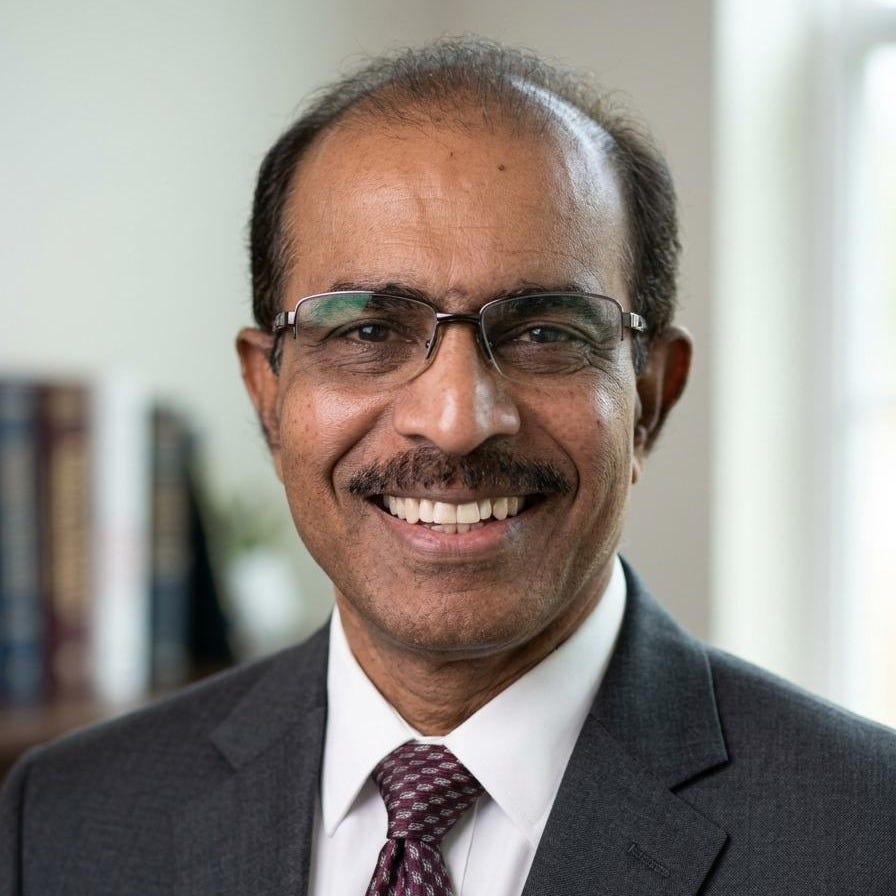
Meda Parameswara Reddy, Ph.D., is a retired scientist with 30 patents and the Director of the Reddy Center for Critical and Integrated Thinking. He applies structural thinking and systems analysis to contested public debates. Reach him at mpreddy54@yahoo.com. His website is
.