
In the high-stakes arena of global diplomacy, the year 2026 has witnessed a remarkable role reversal in South Asia. For over a decade, New Delhi enjoyed the status of Washington’s “indispensable partner,” while Islamabad languished in strategic isolation. However, by prioritising immediate economic gains through discounted Russian oil and maintaining a calculated silence on the invasion of Ukraine, Prime Minister Modi may have fallen into the trap of being “too smart” for India’s long-term interests.
This pursuit of strategic autonomy, while profitable in the short term, created a diplomatic vacuum. Today, as high-stakes peace negotiations between the United States and Iran unfold not in New Delhi but in Islamabad, it is becoming clear that India’s arch-rival has seized the spotlight that India inadvertently left behind.
The foundation of this shift lies in the “profit over principle” calculation made by New Delhi following the 2022 invasion of Ukraine. India chose to bypass Western sanctions, significantly increasing its imports of Russian crude oil to over 2 million barrels per day by early 2026.
While framed as a masterstroke of energy security, the cost of this “neutrality” has been steep. The United States, shifting toward a more protectionist “America First” posture, responded with 50% secondary tariffs on key Indian sectors. India’s insistence on “strategic autonomy” successfully protected its fuel prices but effectively eroded its “special status” in Washington.
This transformed a values-based partnership into a cold, transactional, and increasingly friction-filled relationship.
While India was busy navigating trade wars and defending its ties to Moscow, a geopolitical opening emerged in the Middle East. As tensions between the US and Iran reached a breaking point in late 2025, a mediator was desperately needed.
By calculating that India was “too big to fail” and too important to be penalised, New Delhi underestimated the speed with which the US would pivot its focus
Historically, India might have filled this role, given its investments in Iran’s Chabahar Port. However, India’s perceived closeness to the Russia-Iran-China axis made it an unsuitable bridge for Washington.
Pakistan’s Pragmatic Mediation: Filling The Vacuum In The Middle East’s Latest Unnecessary Crisis
In a surprising turn of diplomatic opportunism, Pakistan stepped into the breach.
The “Islamabad Talks” of April 2026 represent a total shift in the regional spotlight. By facilitating the current ceasefire negotiations between the US and Iranian delegations, Pakistan has reinvented its image.
It is no longer viewed through the narrow lens of a “troubled state,” but rather as an essential security facilitator. While India maintains the larger economy, Pakistan has gained the “Mediator’s Premium”—the invaluable diplomatic leverage that comes with being the only actor capable of bringing bitter enemies to the table.
Ultimately, the current landscape suggests that Prime Minister Modi’s strategy may have been an example of strategic overreach. By calculating that India was “too big to fail” and too important to be penalised, New Delhi underestimated the speed with which the US would pivot its focus.
In the zero-sum game of regional influence, India’s withdrawal into a self-centred neutrality allowed its arch-rival to occupy the centre stage. As the 2026 peace talks continue in Islamabad, the message to the world is clear: in the pursuit of being “too smart” to take a side, India has inadvertently made itself a spectator in a theatre where it once expected to lead.
Tags: India foreign policy, Pakistan diplomacy 2026, US Iran peace talks Islamabad, strategic autonomy India criticism, South Asia geopolitics shift, TFT, Friday Times
Share:
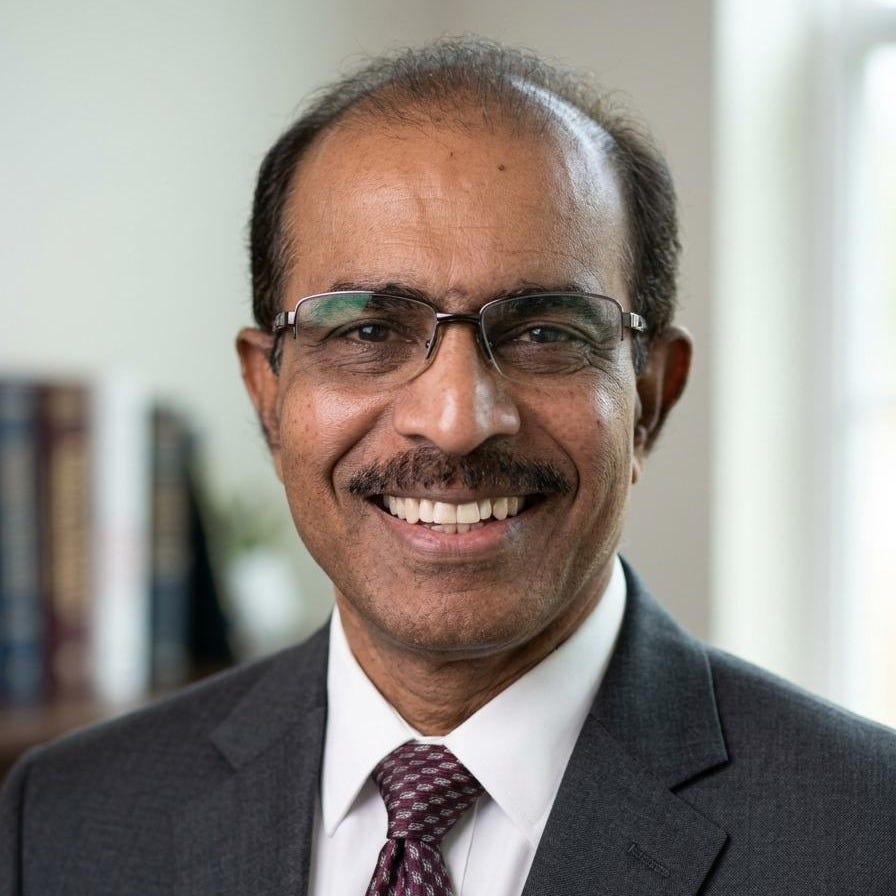
Meda Parameswara Reddy, Ph.D
The author is a retired scientist and the director of the Reddy Centre for Critical and Integrated Thinking. With a PhD in science and 30 U.S. patents, he utilises structural thinking to analyse contested public debates. His work focuses on the intersection of international policy and structural systems.